Ewa Raczkowska
07/12/2025
Put something on!
This article is gonna be standing on a pretty philosophical thread, I already know. I couldn’t think of Ewa’s work in any other way than one that resonates with Borges’s The Garden of Forking Paths. The artist herself gives a clear example of this statement quoting Borges’s work in one of her most important canvas. Ewa’s compositions seem to question time itself: how choices branch, how parallel realities might coexist, how every decision spawns paths that remain simultaneous even as we walk only one. By crowding motives, figures, and objects together she creates poetic connections and disconnections alike. The result is a body of work that depict complexity and invites the viewer to dwell inside it. In Ewa’s first range of paintings (2024-2025) the composition is rich without canceling anything, but letting everything coexist in parallel worlds within the frame.
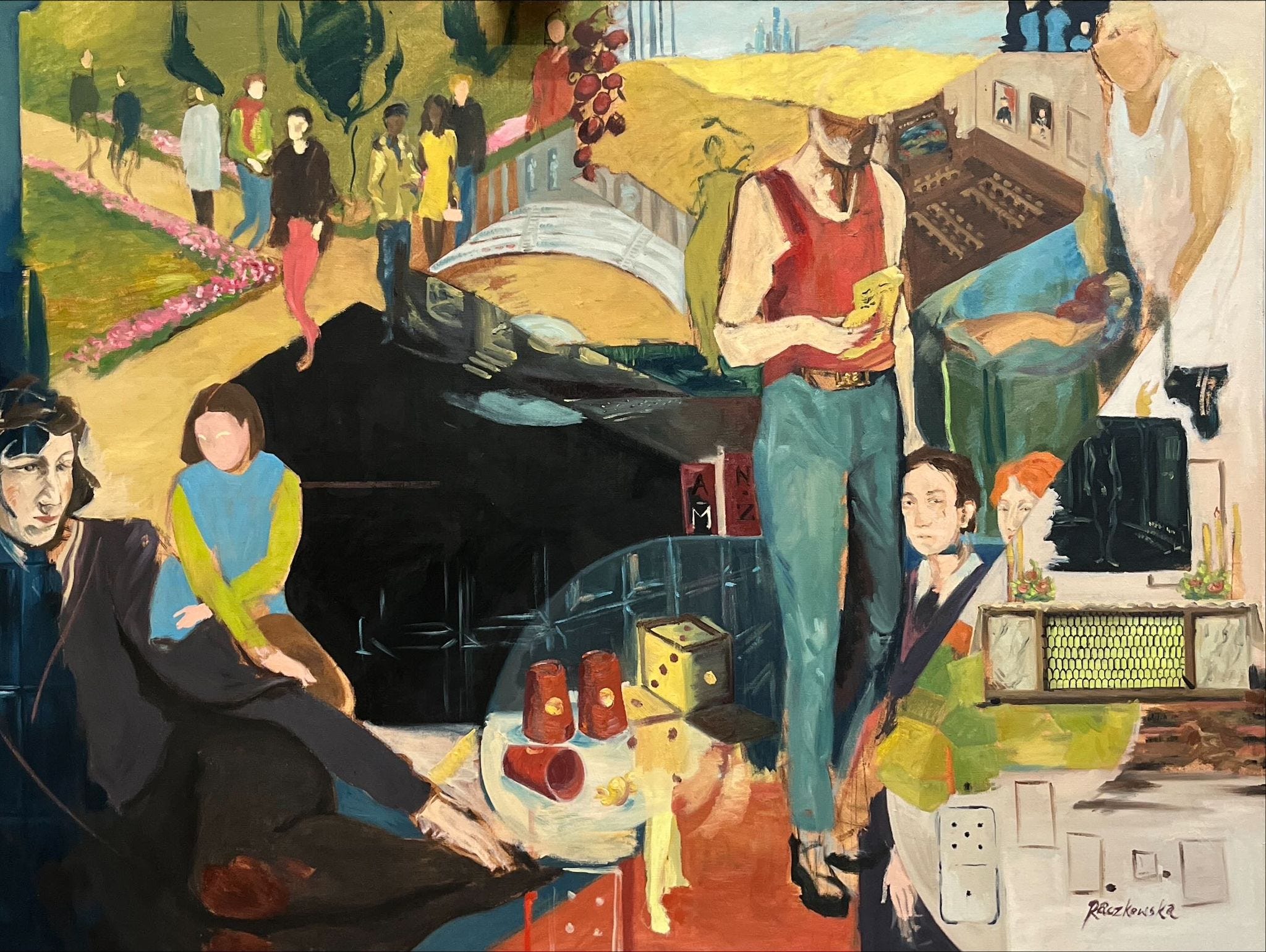
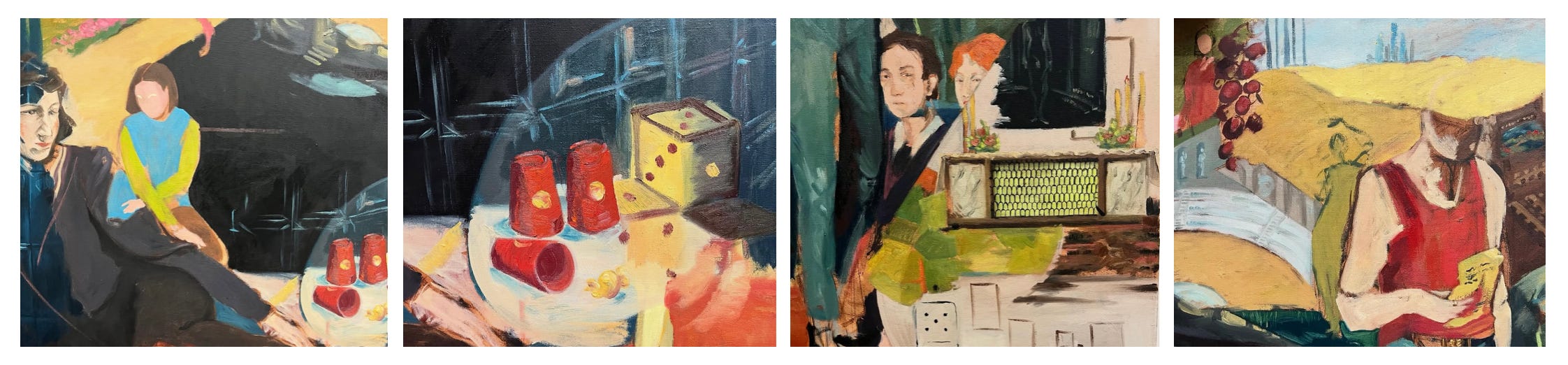
Ewa’s early paintings open a door into an unfinished aspect, the one where stories unfold without ever concluding. Her canvases pull from an eclectic vocabulary: dense arrangements of objects, layered moments, splintered scenes that read like narrative collages. Frames bloom inside the main one. The viewer is asked not to follow a single plot but to wander among many. In this crowded visual field, the eye is never allowed to rest on one meaning, instead, it drifts, negotiates, and eventually accepts that multiple possibilities overlap coexisting with one another.
Another intrinsic characteristic of her works is the expressive exaggeration of her style, that voluntarily refuses realism. Figures strike theatrical poses. Objects are simplified into geometric suggestions, while settings hover between abstraction and architecture. Contemporary artifacts such as phones, patterned dresses, glowing screens are present and weirdly coexist with classical references, collapsing historical distance into a single plane. For Ewa this often recalls the energy of modern cities, where crowds move brushing against one another. In her aesthetic view, they are inside her canvas more a motif rather than a represented memory.
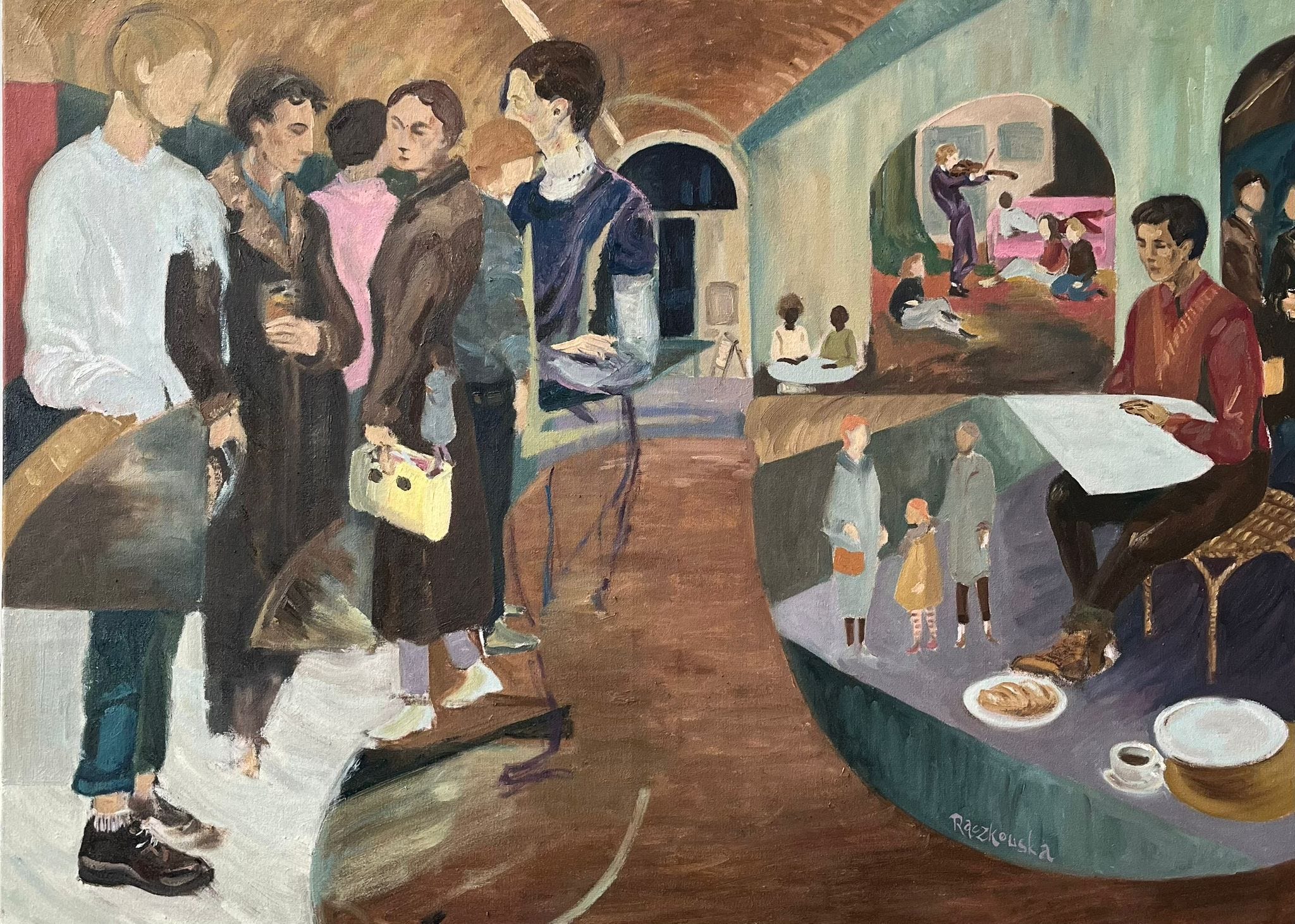
Ewa in her practice both turns these ordinary experiences into poetic allegories, giving them symbolic weight and an oneiric charge, while at the same time just represent them as they are: naked from any other meaning. This paradox creates more questions than answers for sure, but it allows the viewer to have his own thoughts about what he’s seeing.
Take something off!
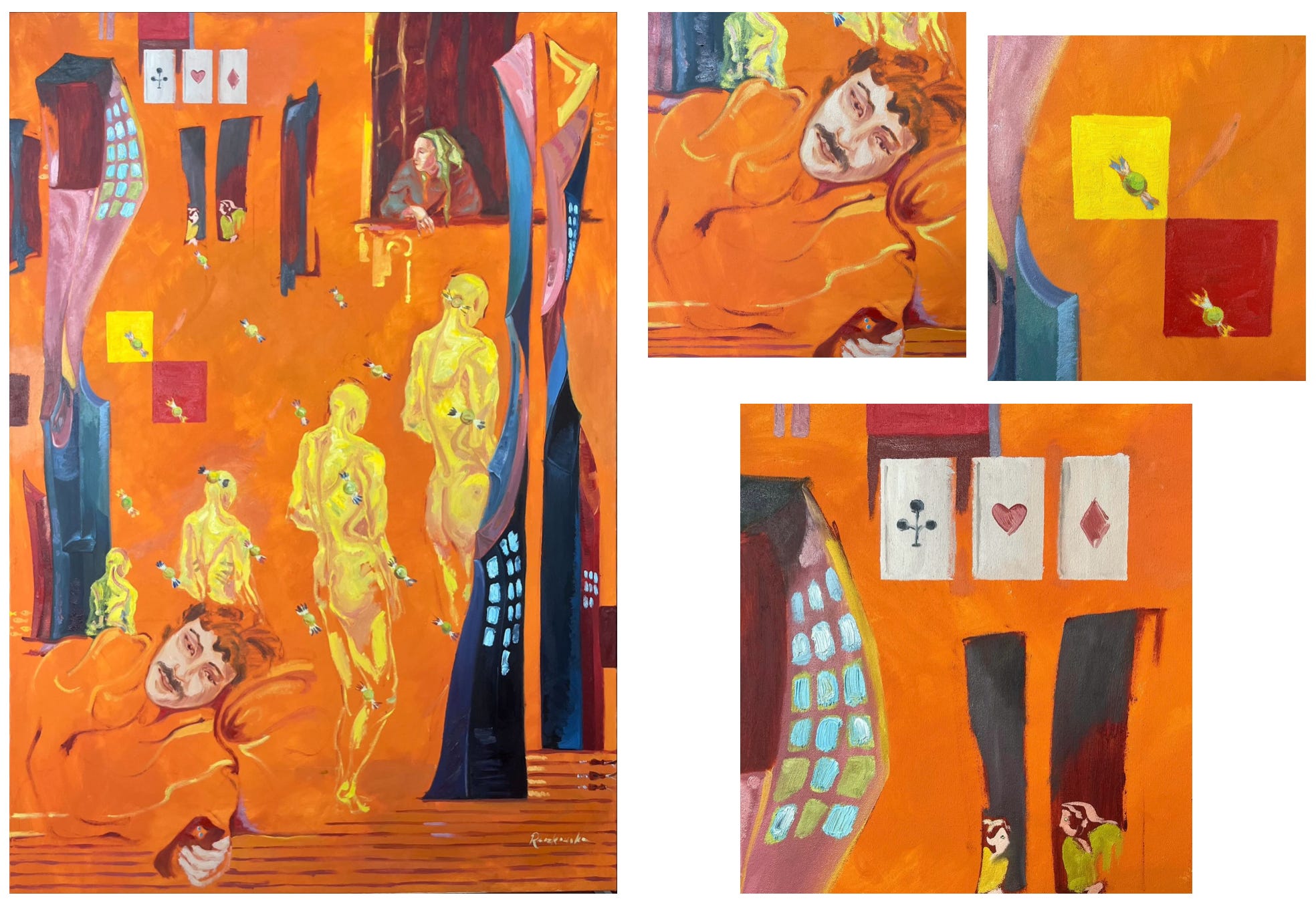
Ewa’s new paintings mark a shift: color and pattern no longer play supporting roles but stand at the center of the stage. Pattern, in particular, emerges as the protagonist, structuring the visual motif and dictating the emotional temperature of the work. Color, in turn, becomes the pattern’s accomplice: shaping it, amplifying it.
This evolution arrives alongside Ewa’s parallel commitment to narrative in her novel, a project that absorbs her ‘storytelling’ and leaves space in the canvas. The paintings are not pressured to ‘go narrative’ and crowded with characters because that work is happening elsewhere. By allowing these two mediums to separate Ewa gives each form space to renew. A striking part of this new process is her use of overpainting, a corrective gesture that acts as both restraint and refinement. When the work begins to overflow, she turns to subtraction for clarity. Like in that Michelangelo-inspired principle, she explains, where you remove what is not necessary (for Coco Chanel it was something similar: before you leave the house, look in the mirror and take one thing off!).
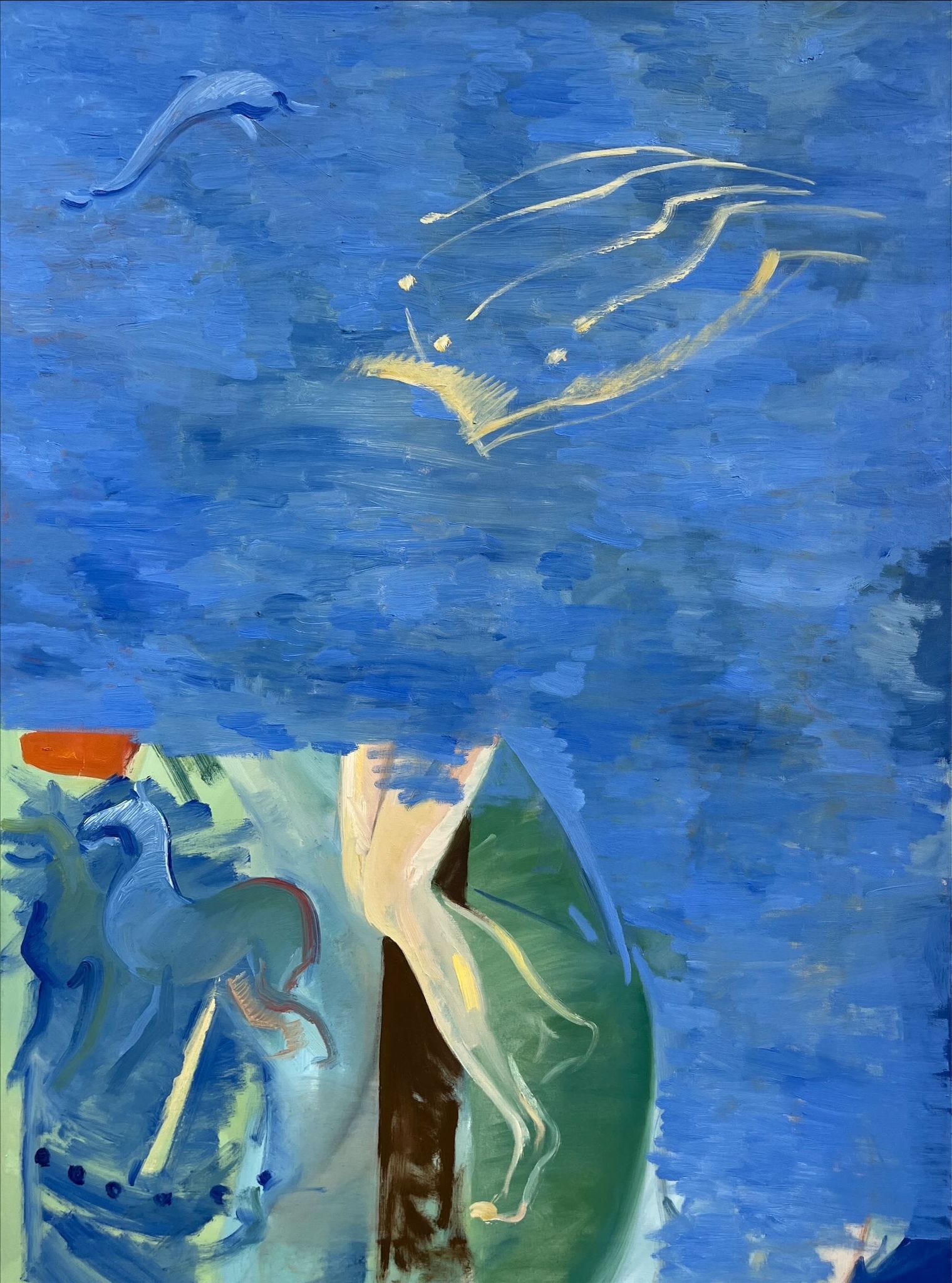
All of this unfolds through an intensely intuitive process. Ewa paints in the moment, working without preparatory drawings. She is guided primarily by color and a private, instinctive taste. The studio becomes a deeply intimate space, one that would not translate into performance because it relies on a quiet internal dialogue rather than spectacle. Her characters come directly from the observation of the contemporary and knowledge of the historical. She paints of friends in Antwerp and models of the Royal Academy of Fine Arts, entangling them with literary and poetic inspirations. In this sense the subject of the paintings often begins in the mundane: fleeting encounters, half-heard conversations, small romances that overlap each other in daily life.
Ewa’s comment:
“Put something on, take something off… every morning in the mirror before I set out to paint. Painting is the making of an object, and with my current approach I want to make that visible.”
I hope you guys enjoyed the article <3
follow us on instagram! @ari4fritta & (on substack), @ewamariaraczkowska