Carmen
08/05/2026
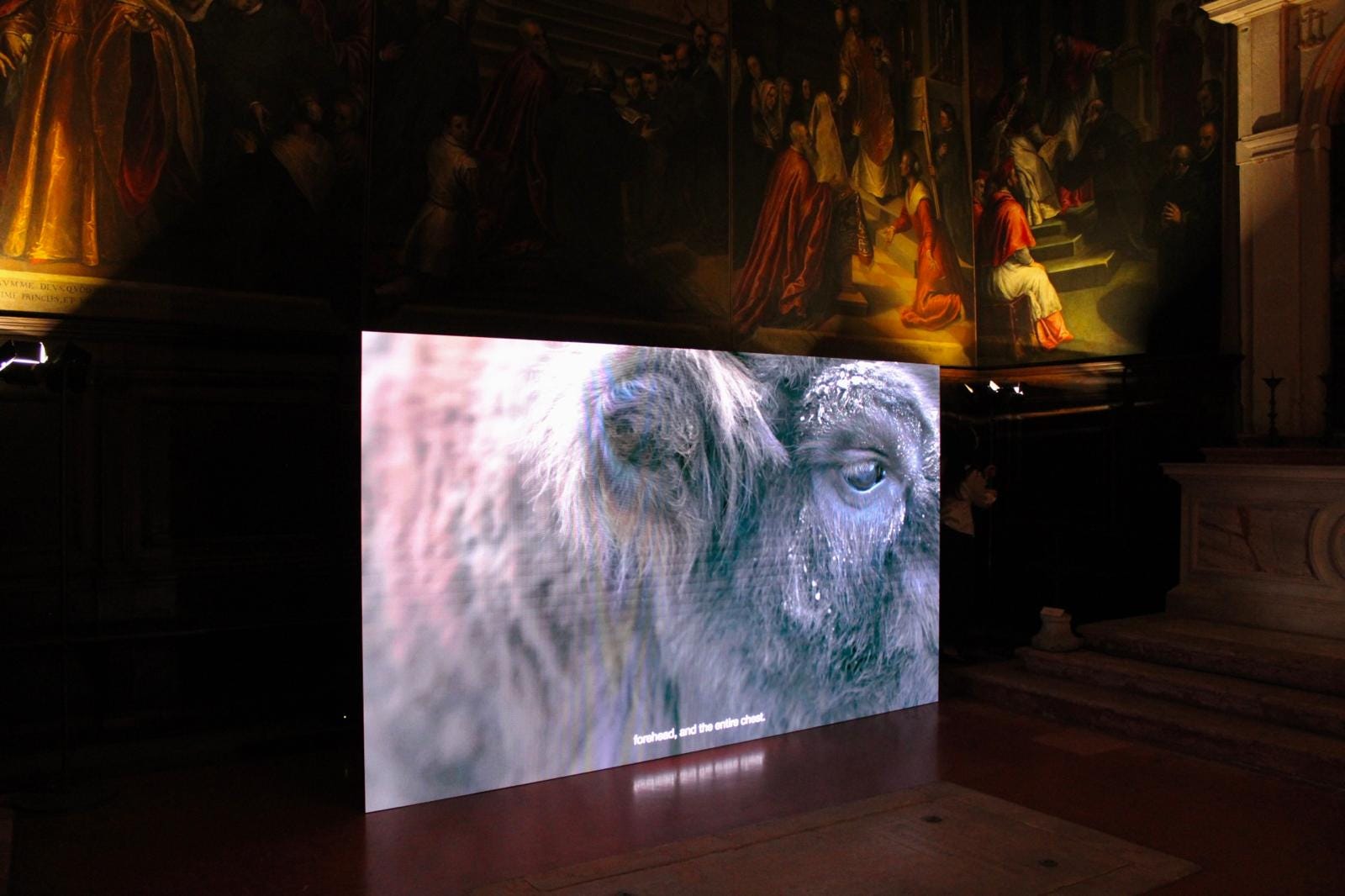
In 1523, Nicolaus Hussovianus completed a poem about the European bison, a diplomatic offering from the Grand Duchy of Lithuania to Pope Leo X, meant to introduce a peripheral region into the cultural heart of the Renaissance. But the act failed: Leo X died before the gift reached him and the poem slipped into obscurity.
Ieva Lygnugarytė’s video installation Carmen (2026) places itself there, in that gap between intention and reception, and refuses to let it close. The work, presented at the Oratorio dei Crociferi in Venice as part of Carmen: Utopias of Belonging, a research project and exhibition curated by Meral Karacaoğlan, takes Hussovianus’s forgotten ode and reinterprets it through a contemporary lens.
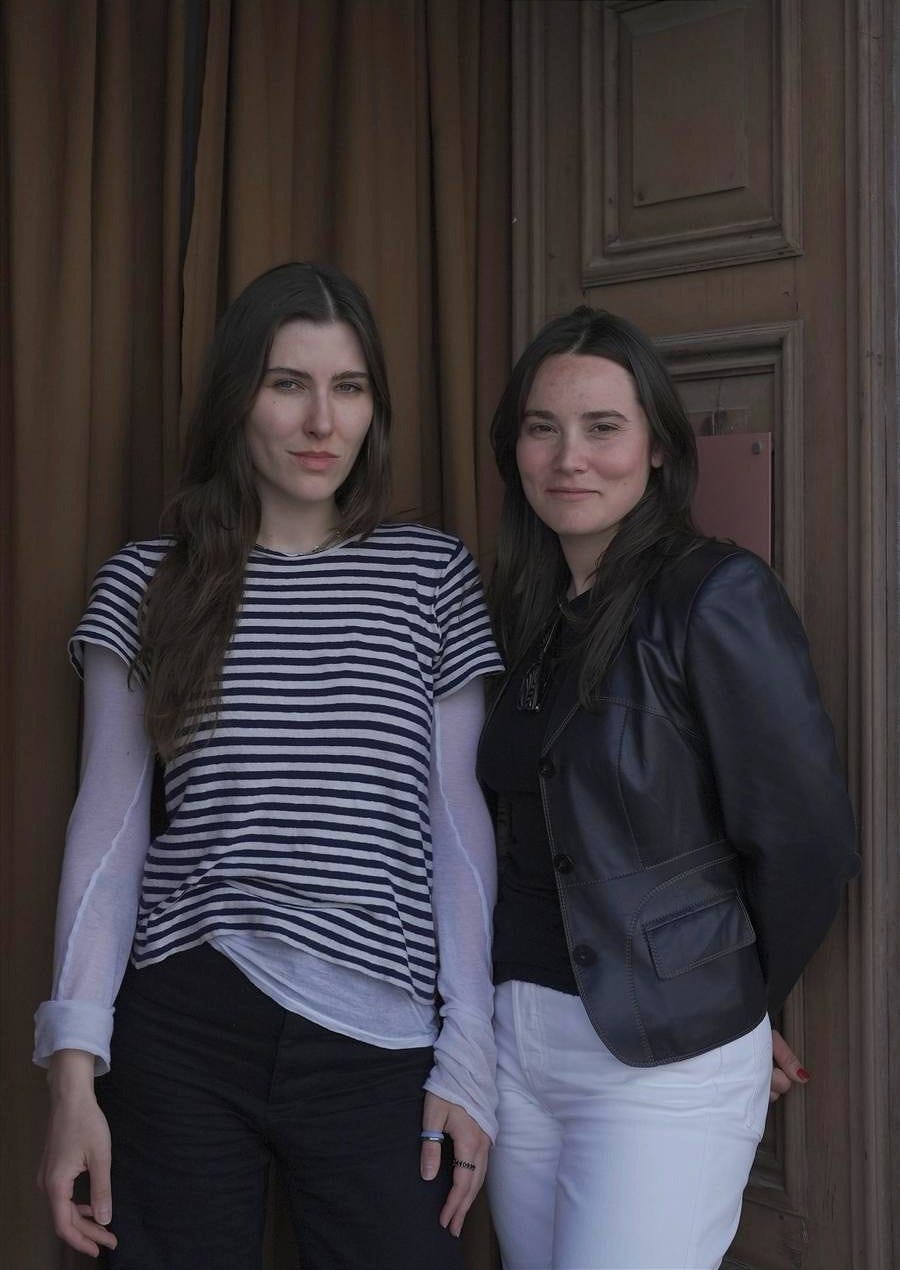
Carmen does not begin in the past, but in the present.
The opening line, taken from the curatorial text of the exhibition, cuts to something timeless: the desire to be recognized, valued, to belong. These themes still surround ordinary life and they scale, inevitably, from the individual to the nation.
Think about what a diplomatic act really is. One country presenting itself to another, not just in political terms, but in human ones. Offering a symbol, a story, a version of itself means hoping it will be received with care.
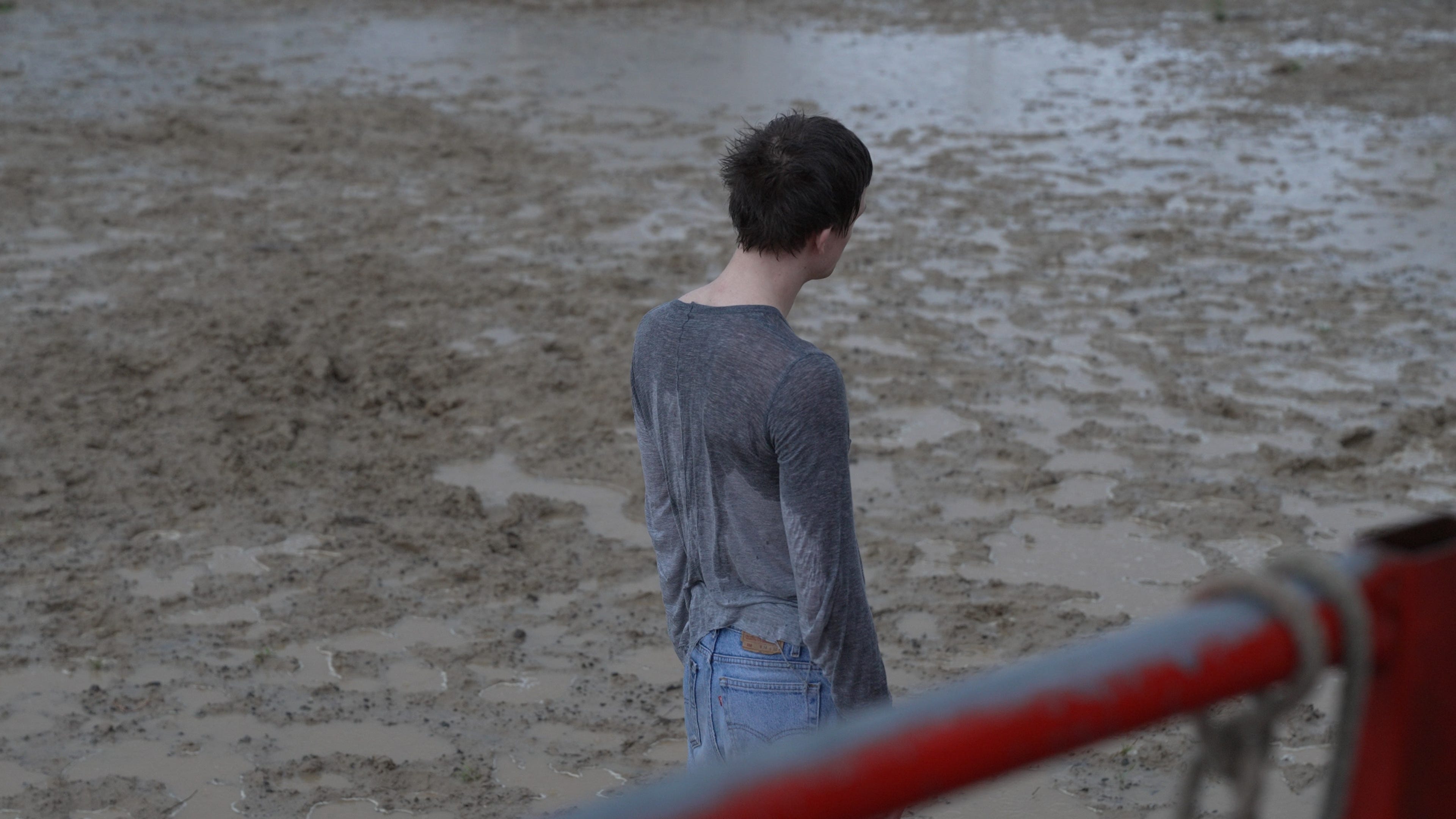
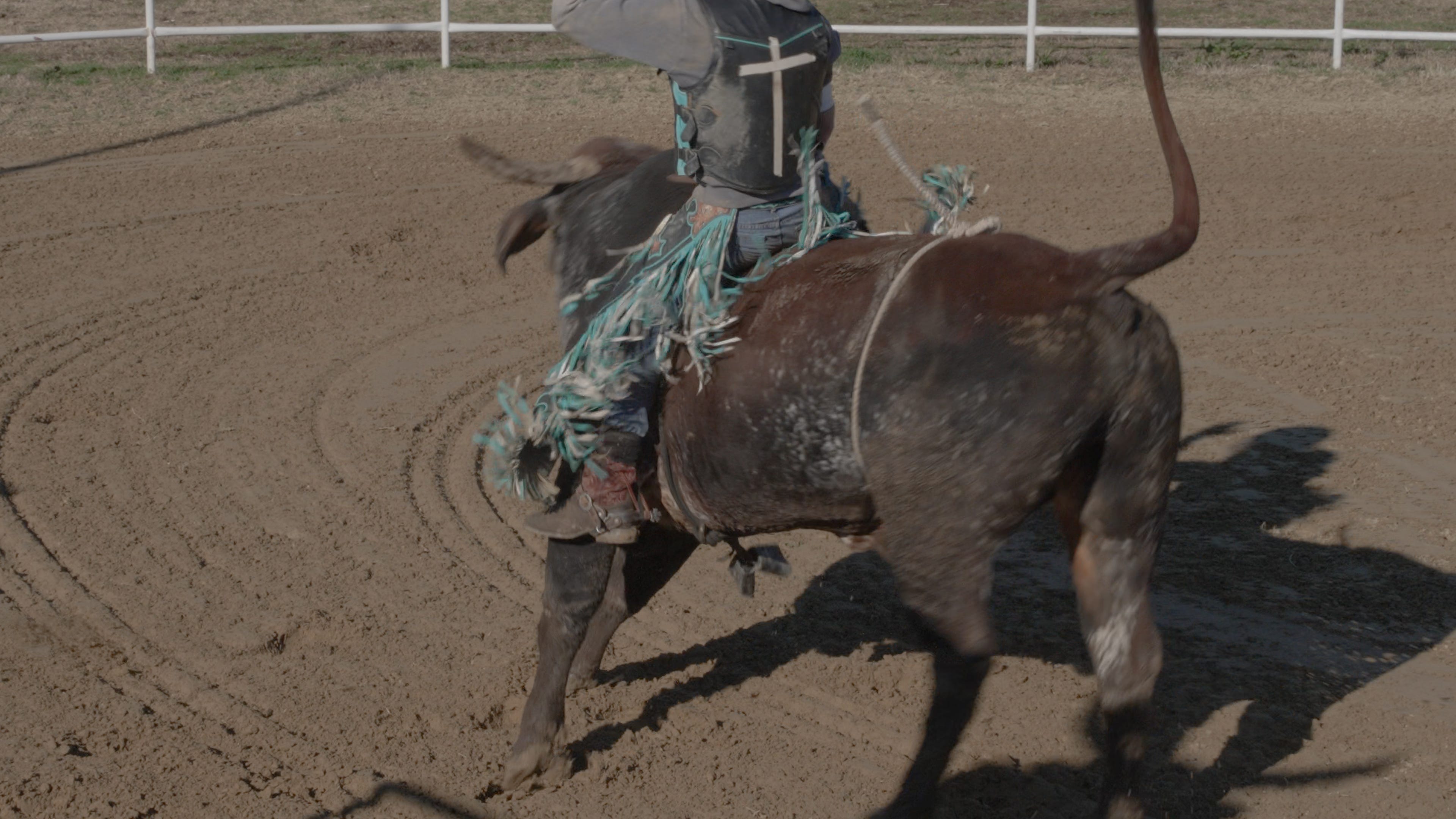
In this sense, Ieva Lygnugarytė’s work is a reenactment and a reckoning. In Carmen, the poet Hussovianus is brought back to life as a figure searching for recognition beyond the borders of northeastern Europe, and gradually he begins to assume the shape of the bison itself, as if, failing to be heard as a voice, he decides to become a symbol. When language cannot cross a border, the body tries. What makes Carmen feel urgent in 2026 is precisely this: the geography it draws around the past event. The Białowieża Forest, the last primeval forest in Europe and the natural home of the European bison, sits today along the contested border between Belarus and Poland, a landscape defined by movement, surveillance, and exclusion. The bison, ancient and unhurried, still roams what remains of that forest.
The choice of venue again recalls the system of relationships that intertwine centers of power, in this case Venice and Rome. Inside the Oratorio dei Crociferi is preserved a pictorial circle of Jacopo Palma il Giovane, representing the most significant events in the history of the Order of the Crociferi and their two benefactor doges. A unicum in Venetian 16th-century art, as it is the only decorative complex of that era attributed to a single artist, with the sole exception of the Scuola Grande di San Rocco decorated by Tintoretto. The site, tucked away from the main circuits of the Biennale, demands to be found. To see Carmen, you have to seek it. You have to choose to go where the center is not. The building itself enacts the question the installation keeps asking: who is seen? Who remains peripheral? How is cultural value assigned?*
*Line taken from the exhibition’s press statement.
Contacts on ig:
@ari4fritta
@ratio_artis
@meral_ka & @ievalygnugaryte